
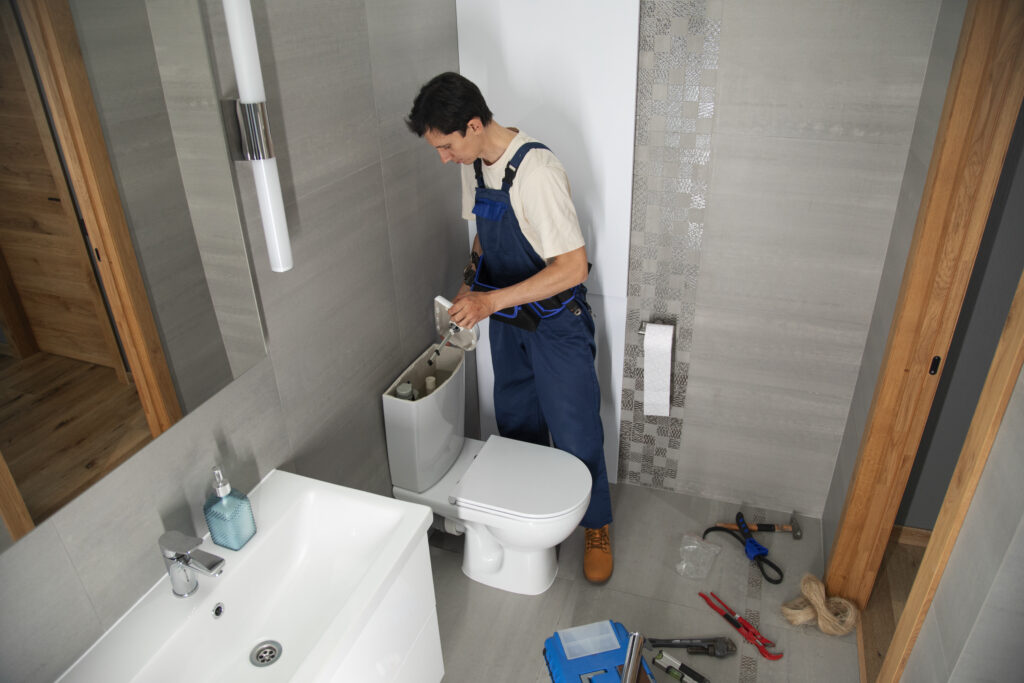
A running toilet might seem like a minor inconvenience, but over time, it can waste thousands of litres of water and add unnecessary costs to your water bill. The good news? Fixing it is often simple and doesn’t require professional help. Most cases come down to worn-out parts inside the tank, which can be easily adjusted or replaced.
This guide will walk you through the most common reasons your toilet won’t stop running and step-by-step instructions on how to fix it. So you can save water, money, and frustration.
What Causes a Running Toilet?
To fix a running toilet, you first need to identify the root cause. The problem typically stems from one of the following issues:
A Faulty Flapper
The rubber seal at the bottom of the tank that controls water flow into the bowl. If it’s worn out or not sealing properly, water will continuously leak through.
An Incorrect Float Level
The float determines when to stop refilling the tank. If it’s set too high, water will keep overflowing into the overflow tube, causing continuous running.
A Leaky Fill Valve
If the fill valve isn’t shutting off properly, water will keep running even when the tank is full.
Chain Issues
The chain connecting the flush handle to the flapper might be too long (causing it to get stuck under the flapper) or too short (preventing the flapper from sealing properly).
Tools & Materials You’ll Need
Before you get started, gather the following:
- Adjustable wrench – For loosening and tightening nuts.
- Screwdriver – Some adjustments require a flathead screwdriver.
- Replacement flapper – If the current one is worn out.
- Float adjustment clip – If your float needs repositioning.
- New fill valve – If the fill valve is faulty.
Most repairs are inexpensive, and many parts are available in universal sizes to fit any toilet.
Step-by-Step Fix for a Running Toilet
Step 1: Check the Fill Tube
The fill tube is a small flexible hose that refills the toilet bowl after each flush. If it’s disconnected or not positioned correctly, water may continuously run.
- Lift the tank lid and check that the fill tube is connected to the overflow pipe.
- If it’s too long or positioned incorrectly, trim it down and ensure it sits just above the overflow pipe opening.
- Test the flush again to see if this resolves the issue.
Step 2: Adjust the Float to Control Water Level
If the float is set too high, water will keep overflowing into the overflow pipe, causing the toilet to run continuously. Lowering it ensures the fill valve shuts off at the right level.
- Identify whether your toilet has a ball float (attached to a metal arm) or a cup float (which slides up and down the fill valve).
- For ball floats: Turn the adjustment screw or gently bend the arm downward to lower the water level.
- For cup floats: Locate the adjustment clip and slide the float lower on the fill valve.
- Flush the toilet and observe whether the running stops once the tank refills.
Step 3: Inspect and Replace the Flapper
The flapper is the rubber valve at the bottom of the tank that seals the flush valve. If it’s cracked, warped, or coated in mineral deposits, it won’t seal properly—leading to constant water leakage.
- Turn off the water supply to the toilet and flush to drain the tank.
- Unhook the old flapper and replace it with a new one (make sure it’s the correct size for your toilet model).
- Reconnect the chain, ensuring it has just enough slack for the flapper to close fully after each flush.
Step 4: Check and Adjust the Chain
A misaligned chain can stop the flapper from sealing properly, allowing water to keep running.
- If the chain is too long, it may get caught under the flapper—trim it down slightly.
- If the chain is too short, it might prevent the flapper from closing—extend it slightly by repositioning the hook.
- Test by flushing and watching if the flapper closes correctly.
Step 5: Replace the Fill Valve if Necessary
If none of the above steps work, your fill valve may be defective, causing water to keep refilling.
- Turn off the water supply and flush to empty the tank.
- Unscrew the old fill valve and replace it with a new one.
- Reconnect the water supply and test the flush—if installed correctly, the tank should refill without continuous running.
When to Replace Your Toilet Instead of Repairing It
If your toilet is old, cracked, or frequently clogging, it may be more cost-effective to replace it instead of constantly repairing individual parts. Consider a replacement if:
- The porcelain is cracked or leaking.
- You’ve replaced multiple components but the problem keeps returning.
- The toilet is over 15 years old and uses excessive water compared to modern water-saving models.
A new toilet can reduce water usage, lower your bills, and prevent future plumbing headaches.
Get Professional Help with MIK Plumbing Service
If your toilet keeps running after trying these fixes, MIK Plumbing Service’s plumbing repair service is here to help. Our expert engineers can quickly diagnose and resolve the issue, saving you time and hassle.
Frequently asked questions
A running toilet can be caused by a faulty flapper, incorrect float level, a leaky fill valve, or chain issues. Identifying the root cause will help you fix the problem.
To fix a running toilet, check the fill tube, adjust the float, inspect the flapper, and adjust the chain. If necessary, replace the fill valve.
Regularly check the flapper, float, and fill valve to ensure they are working properly. Performing routine maintenance can prevent a running toilet.